
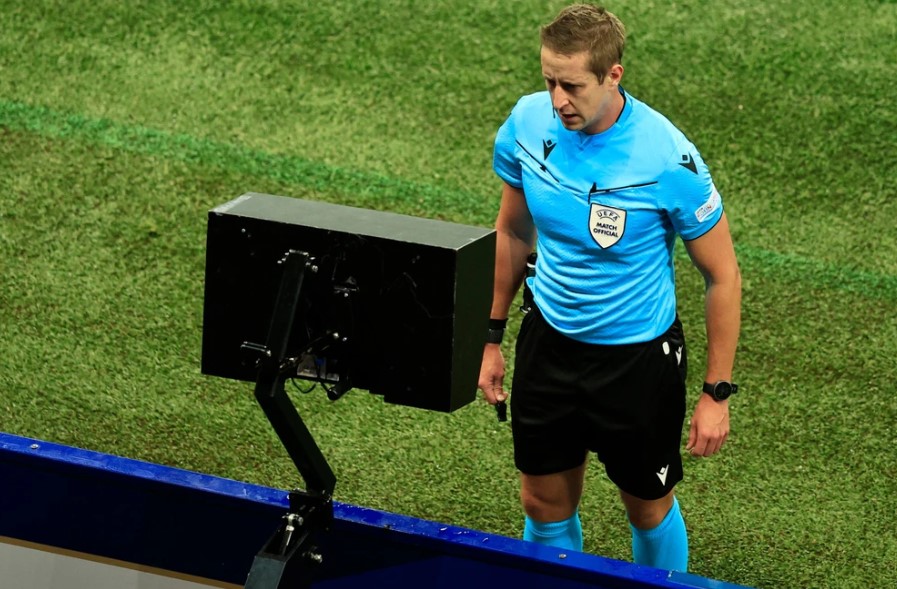
The 2026 FIFA World Cup is ushering in a new era of officiating. For years, fans, players, and pundits alike have bemoaned the time lost to interminable VAR checks and the lingering uncertainty that often accompanies them. At this tournament, FIFA is deploying a suite of significant technological innovations designed to address these frustrations head-on. The goal is simple: reduce decision time, increase transparency, and make the beautiful game fairer and safer without sacrificing its flow. From faster, AI-driven offside alerts to referee body cameras that put you in the official’s shoes, the 2026 World Cup is demonstrating how technology can fundamentally change how matches are officiated and experienced.
Advanced Semi-Automated Offside: Faster, Smarter, Safer
The centerpiece of this officiating revolution is the advanced semi-automated offside technology (SAOT). While the 2022 World Cup in Qatar introduced a version of this system, the 2026 iteration represents a significant leap forward.
The most critical change is the speed of information. In Qatar, the offside data was sent to the video assistant referee (VAR), who would then relay the information to the on-field referee. In 2026, the technology has been upgraded to send real-time audio alerts directly to the match officials on the pitch. This means that for clear offside decisions, an assistant referee can raise their flag immediately, rather than waiting for a passage of play to conclude.
This direct alert system is designed to eliminate the “delayed flag” that has become a common and often frustrating sight in modern football. This delay not only slows the game down but also poses a significant injury risk. As FIFA’s Director of Innovation Johannes Holzmüller noted, the new system allows for a much quicker decision, helping to reduce the risk of injury to players in the moments between an offside occurring and the flag being raised. The tragic case of Nottingham Forest striker Taiwo Awoniyi, who was placed in an induced coma after colliding with a post during a play that was eventually ruled offside, served as a stark reminder of this risk.
The precision of this system has also been dramatically improved. Previous tests of the technology only alerted officials when a player was more than 50 centimeters offside. For the 2026 World Cup, this threshold has been tightened to an incredibly narrow margin of just 10 centimeters. While this represents a major step forward, the system is not without its limitations. It cannot pick out the closest offsides or handle situations where multiple players are grouped closely together. Furthermore, it is limited to positional offside—it will not judge whether a player in an offside position has “interfered” with play, a subjective call that still requires human judgment.
3D Player Avatars: The End of Ambiguous Stick Figures
Perhaps the most visually striking innovation is the creation of photorealistic 3D avatars for every participating player. All 1,248 players across the 48 teams have undergone a detailed 3D body scan, a process that takes just one second per player. The data from these scans is used to create AI-enabled digital replicas of each athlete, complete with their faces, kits, and physiques.
These avatars are integrated directly into the SAOT system. When a tight offside decision is made, FIFA and its broadcast partners can now show viewers a 3D recreation of the incident that is far more intuitive and accurate than the stick-figure animations of the past. “It’s immediately obvious which players are involved in the offside position,” said Holzmüller. Seeing a realistic digital version of, for example, Lionel Messi appearing on screen to explain a close call provides an unparalleled level of clarity and transparency.
A New Perspective: Referee Body Cameras and Enhanced Transparency
For the first time in a World Cup, referees are wearing body cameras, giving fans an immersive, first-person perspective of the action. The headset-mounted camera provides a “referee view,” allowing viewers to see the game from the official’s point of view.
This technology has been trialed in various leagues, including the Bundesliga and at the 2025 FIFA Club World Cup, and the response from viewers has been overwhelmingly positive. However, a key challenge has been the stability of the footage. An official constantly running means a shaky image. Lenovo, FIFA’s official technology partner, has applied AI-powered stabilization technology to cut motion blur by up to 50%, delivering a much higher quality and more watchable broadcast feed. FIFA Referees Committee chairman Pierluigi Collina stated that the trial exceeded expectations, and the technology is being praised as a major innovation for broadcasting since the introduction of VAR.
Expanding the Toolbox: Line of Sight and Out-of-Bounds Technology
The technological enhancements extend beyond offside and referee perspectives. The 2026 World Cup is introducing new capabilities to solve other historically contentious officiating dilemmas.
Line-of-Sight for Offside
One of the most difficult offside calls for a referee to make is determining if an attacking player, who is in an offside position, is blocking the goalkeeper’s view of the ball. This “line-of-sight” judgment is notoriously subjective. To assist VARs, the system now provides two virtual camera feeds that replicate the perspectives of both goalkeepers. This allows officials to see exactly what the goalkeeper could see, making the decision of whether their vision was obstructed much clearer and more transparent.
Out-of-Bounds Tech
The tournament is also deploying technology to definitively determine if the ball has gone out of play before a goal is scored. By combining the sensor data from the ball’s internal chip with 3D recreations of the field, the system can show the exact position of the ball at a crucial moment, similar to goal-line technology. The embedded chip will also indicate which player touched the ball last, aiding VAR in making decisions on corner kicks and throw-ins.
Conclusion: A Technologically Advanced and Transparent Tournament
The 2026 World Cup is setting a new standard for officiating. The combination of enhanced semi-automated offside technology, realistic 3D player avatars, stable referee body cameras, and new tools for judging line-of-sight and out-of-bounds plays is creating a more transparent, faster, and ultimately safer game. While technology may never eliminate controversy or the need for human judgment, it is clear that FIFA is committed to using every available tool to support its officials and improve the experience for players and fans alike. As football continues to evolve, the innovations seen this summer will likely become the new normal, fundamentally changing how we watch, understand, and enjoy the beautiful game.